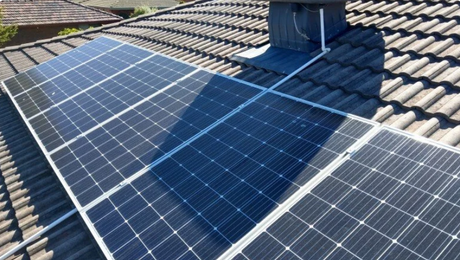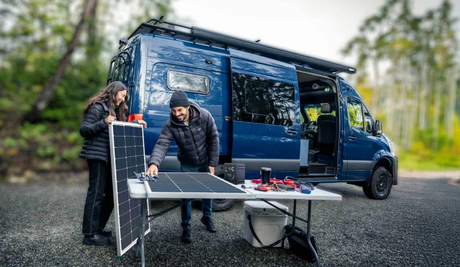


Solar panel technology has revolutionized the renewable energy landscape, driven by two powerful trends: a dramatic decrease in cost and the steady rise of solar panel efficiency by years. Improved manufacturing and growing demand have made solar power more accessible and effective than ever. These advancements are crucial for homeowners and policymakers alike, paving the way for a cleaner, more sustainable future.
Solar Panel Efficiency over Time
The evolution of solar panel efficiency over time is a testament to human innovation and technological progress. Since their inception in the 1950s, photovoltaic efficiency over time has shown remarkable improvement, transforming solar energy from a niche technology to a mainstream power source.
In the early days, solar efficiency over time was relatively low, with panels converting only about 6% of sunlight into electricity. However, continuous research and development led to steady advancements. By the 1990s, commercial panels reached efficiencies of 14-15%, making solar energy more viable for widespread use.
The 21st century has seen exponential growth in solar panel efficiency. Current solar panel efficiency for commercially available models typically ranges from 15% to 22%. High-end panels can even reach efficiencies of 22-23%, a significant leap from earlier generations.
Several factors have contributed to this improvement in solar efficiency over time:
- Advanced materials and manufacturing techniques
- Multi-junction cells capturing more of the light spectrum
- Innovations like perovskite technology showing rapid efficiency gains

Why Solar Panel Efficiency Matters?
Solar panel efficiency is a critical factor in the effectiveness and adoption of solar energy technology. Higher efficiency in photovoltaic systems leads to increased energy output from the same amount of sunlight, which has significant implications. Improved efficiency allows for better space utilization, making solar viable in areas with limited installation space. It also enhances cost-effectiveness, as fewer panels are needed to meet energy requirements, reducing installation and maintenance costs. Environmentally, higher efficiency means less raw material use and a lower carbon footprint. More efficient panels contribute to grid stability by providing more consistent and reliable energy output. As solar panel efficiency over time continues to improve, these benefits become more pronounced, driving further adoption and technological advancement in the renewable energy sector.
How Do Solar Panels Work?
Solar panels work by turning sunlight into electricity. Each panel is made up of many smaller units called solar cells, which are usually made from a material called silicon. When sunlight hits these cells, it knocks tiny particles called electrons loose from the silicon atoms. The cells are specially designed to push these free electrons in one direction, creating a flow of electricity — just like water flowing through a pipe. This type of electricity is called direct current (DC).
The DC electricity then travels to a device called an inverter, which changes it into alternating current (AC) — the kind of electricity your home appliances and lights use. From there, the AC electricity goes into your home’s electrical panel and powers everything you plug in or turn on. If your solar system produces more power than you need, the extra can be sent back to the grid or stored in a battery for later use.
What Affects Solar Panel Efficiency?
- Material and Cell Technology: The type of semiconductor used is the most fundamental factor. Monocrystalline silicon panels are the most efficient among commercially available options, typically ranging from 18% to 23%. Polycrystalline panels are slightly less efficient (15%–18%) but more affordable. Newer technologies like perovskite are even more efficient in labs, but not yet common for homes.
- Temperature: Solar panels actually work worse when they get very hot. If the panel temperature rises above 25°C (77°F), efficiency drops by about 0.3–0.5% for each extra degree Celsius. hat’s why a sunny but cool day is often generate more electricity than a scorching hot one.
- Shading: Even a small shadow from a tree, chimney, or bird dropping on one part of a panel can lower the whole panel’s output. Modern solar panels have bypass diodes to reduce this problem, but careful placement to avoid shadows from trees, chimneys, or neighboring buildings remains essential.
- Sunlight Angle: Solar panels are most efficient when sunlight strikes them perpendicularly. If the sun is low in the sky or panels are not tilted correctly, they capture less energy. Adjustable mounts or trackers that follow the sun can boost output by 20–30%.
- Degradation Over Time: All solar panels slowly lose efficiency over time. High quality solar panels degrade about 0.3–0.7% per year. That means after 25 years of use, they still work at about 85–90% of their original output.
Tracking Solar Panel Efficiency
Solar panel efficiency has dramatically improved since the technology's inception, driving widespread adoption of photovoltaic systems. This timeline highlights key milestones in solar efficiency over time, showcasing the evolution from early innovations to current solar panel efficiency standards.
| Year | Milestone / Solar Panel Efficiency |
|---|---|
| 1954 | First practical silicon solar cell, about 6% efficiency |
| 1960s | Space applications push efficiency to 14% |
| 1970s | Terrestrial solar cells reach 13-15% efficiency |
| 1985 | Silicon cells achieve 20% in the laboratory |
| 1990s | Commercial panels typically offer 14-15% efficiency |
| 1999 | Spectrolab achieves 32.3% with a multi-junction cell |
| 2006 | University of Delaware creates a 42.8% multi-junction cell |
| 2010 | Commercial panels commonly reach 15-17% efficiency |
| 2015 | SunPower announces a 22.8% efficient commercial panel |
| 2019 | NREL develops a six-junction solar cell with 47.1% efficiency |
| 2021 | Oxford PV achieves 29.52% with perovskite-silicon tandem cell |
| 2024 | Top commercial panels offer 22-23%, some reaching 24% |
| 2025 | Solar power systems have also made their mark again in 2025, countries such as Bulgaria, Pakistan, Hungary and Poland sourced around 20% or more of their electricity from solar farms, cutting both costs and emissions. |
Cost of Solar Panels over Time
The cost of solar panels has dramatically decreased over the past few decades, making solar energy more accessible. In the early 1970s, solar panels cost around $100 per watt, restricting their use to specialized applications. By the 2000s, advancements in technology and manufacturing reduced prices to about $10 per watt.
A key principle in this decline is Swanson's Law, which states that the price of solar photovoltaic modules drops by approximately 20% for every doubling of cumulative shipped volume. This principle has consistently driven down costs over the years.
As of 2024, the average cost per watt for solar panels was between $2.41 and $3.66, making solar energy more affordable than ever. This decrease is attributed to innovations in solar technology, economies of scale, and growing global demand for renewable energy.
Looking ahead, the cost of solar panels is expected to continue falling. The International Energy Agency (IEA) predicts that by 2030, solar energy could become one of the cheapest sources of electricity worldwide. The ongoing reduction in solar panel costs underscores the transformative potential of solar energy, making it an increasingly viable option for homeowners and businesses.

Will the Cost of Solar Continue to Decline
Yes, the price of solar power will continue to drop. The cost of solar panels has significantly decreased over the past decade, making solar energy more accessible than ever. Advances in technology, increased manufacturing efficiency, and government incentives have all contributed to this decline. As solar panel technology continues to evolve, we can expect the cost of solar panels to keep dropping. Innovations like more efficient photovoltaic cells and streamlined production processes will drive prices down further. Additionally, as demand for renewable energy sources rises, economies of scale will likely continue to reduce costs. The combination of these factors suggests that the cost of solar panels will continue to decline, making solar energy a more viable and attractive option for households and businesses. Investing in solar panels now can lead to long-term savings and environmental benefits, as the trend towards cheaper and more efficient solar energy solutions shows no signs of slowing down.
FAQs About Solar Panel Efficiency
1. How are solar panels used today?
Solar panels today primarily generate electricity for residential, commercial, and industrial use. They're installed on rooftops or in open areas to convert sunlight into electricity through photovoltaic cells. This energy powers homes, businesses, and can be fed back into the grid. Solar panels also support off-grid applications, providing electricity in remote areas or during emergencies.
2. How was solar energy used in the past?
Historically, solar energy heated water or air for industrial and residential needs. Ancient civilizations used magnifying glasses to start fires. In the 19th century, solar thermal systems heated water and air. Advances in the mid-20th century enabled direct conversion of sunlight into electricity, gradually shifting solar energy from heating to electricity generation.
3. How has solar energy changed over time?
Solar energy has evolved with technology, efficiency gains, and environmental awareness. In the mid-20th century, photovoltaic technology enabled direct electricity conversion. Advances since then have reduced costs, expanded installations globally, and driven innovation. Supportive policies and environmental concerns have accelerated adoption, making solar energy a mainstream electricity source today.
4. When did solar panels become popular?
Solar panels gained popularity in the late 20th century due to technological advancements and energy crises. The 1970s oil crises spurred interest in alternative energy sources like solar power. By the early 2000s, declining costs, environmental awareness, and government incentives led to widespread adoption. Today, solar panels are ubiquitous, with global installations growing steadily as a clean energy solution.
Conclusion
The story of solar panel efficiency and cost is one of remarkable progress. From 6% efficiency and $100 per watt in the 1950s to 22% efficiency and under $3 per watt today, the trajectory is clear: solar energy has become dramatically more efficient and affordable with each passing decade. And the pace of innovation shows no signs of slowing—perovskite tandem cells, advanced passivation techniques, and new manufacturing methods promise to push commercial efficiencies past 25% in the coming years.
For homeowners, businesses, and policymakers, the implications are straightforward. Solar isn’t just the future of energy, it is increasingly the smart choice for the present. Whether you’re considering a small off-grid setup or a full rooftop installation, understanding the principles of efficiency will help you make informed decisions.
At Renogy, we’ve been part of this journey from the beginning, offering reliable and innovative solar solutions designed to meet real-world needs. Our upcoming new solar panel delivers more power in the same space. Subscribe for early access, and take the first step toward energy independence today!


![Which Marine Battery is Right for You [2026 Guide]](http://ca.renogy.com/cdn/shop/articles/how-to-choose-marine-battery_5af35244-b269-4d22-8ef2-af84d70386ed.png?v=1777428541&width=460)