

Canada is a challenging environment for solar power. Long summer days can deliver incredible energy, but winter trips, coastal rain, mountain shade, snow, ice, and low sun angles all test a system’s real-world performance. That is why the decision between flexible and rigid solar panels is so important: it affects your power budget, your roof’, your fuel, your maintenance costs, and your ability to stay off-grid when the weather turns.
This guide will help Canadian RVers compare flexible and rigid solar panels for real conditions: cost, durability, installation, snow and shade performance, and long-term value.
Flexible vs. Rigid Solar Panels: Quick Comparison
The table below is a starting point, not a substitute for checking the specifications of a particular model. Cell technology, installation method and operating temperature can change the real-world result.
| Consideration | Flexible solar panels | Rigid solar panels |
|---|---|---|
| Best fit | Gently curved roofs, tight clearances and weight-sensitive builds | Flat or suitably sloped roofs with room for brackets and an air gap |
| Weight and profile | Usually lighter and closer to the roof | Heavier and taller because of the frame and mounting hardware |
| Heat management | Needs careful attention when installed flush to a roof | An air gap can improve airflow beneath the panel |
| Installation | May use approved adhesive, low-profile hardware or another specified method | Usually uses brackets, rails or a similar mechanical mounting system |
| Roof work | May reduce roof penetrations, but adhesive still requires compatible materials and proper sealing | May require fasteners and sealed roof penetrations, depending on the mounting design |
| Maintenance | Low profile, but checking the bond, backing and cable entry can be important | Easy to inspect around the frame, brackets and cable routing |
| Typical choice | Curved RV roofs, campervans and lightweight mobile systems | Travel trailers, fifth wheels, cabins and permanent or semi-permanent systems |
What Are Flexible Solar Panels?
Flexible solar panels use a thin construction that can conform to certain gently curved surfaces. They are often considered for campervans, RVs, boats and other mobile applications where a framed panel would be too heavy, too tall or difficult to position.
The main attraction is the low profile. A flexible panel can sit close to an RV roof, which may help when clearance matters or when you want to avoid adding a tall structure above the roofline. The trade-off is that the installation method, roof surface and heat management matter more.
“Flexible” does not mean “bend anywhere” or “walkable.” Every panel has a permitted bend radius and a defined installation method. Never fold a panel sharply, step on it or glue it to a roof membrane without checking the product and RV manufacturer’s instructions.
What Are Rigid Solar Panels?
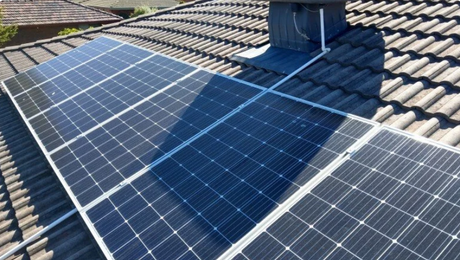
Rigid solar panels are the familiar framed modules with a protective glass surface and a metal frame. They are commonly mounted above RV roofs, cabins, workshops and ground structures using brackets or rails.
The raised installation can create an air gap below the panel. Airflow may help the panel run cooler than a flush-mounted panel, and the frame gives installers a clear place to attach clamps and inspect the module. Rigid panels do add weight and height, so the roof structure, total vehicle clearance and mounting design must be checked first.
Rigid panels are not limited to perfectly flat roofs. With the correct brackets, they can work on many flat, gently sloped or suitably shaped RV roofs. The important questions are whether the mounting system is approved for the roof and whether it can handle vibration, wind and local weather exposure.
How to Choose the Right Solar Panel for a Canadian RV
1. Start with the roof shape and available space
Measure the usable roof area before comparing wattage. Leave room for air conditioners, vents, antennas, satellite equipment, roof hatches and safe service access. A panel that fits on paper may still be a poor choice if it creates a shadow or blocks a component that needs maintenance.
Flexible panels can make better use of a gently curved section. Rigid panels are often easier to lay out on a broad, stable roof where brackets and service clearances are available.
2. Consider roof weight and vehicle clearance
Look at the panel weight, brackets, cable glands and any additional hardware—not only the panel’s nameplate. Confirm the RV manufacturer’s roof-loading guidance and keep the vehicle’s overall height in mind. A few extra centimetres can matter when entering a garage, storage building or low-clearance campground entrance.
A lighter panel can reduce the added roof load, but it does not remove the need for a roof inspection. The roof must still support the chosen installation method and withstand highway vibration.
3. Match the panel to the way you travel
- Short summer trips: A compact system may be enough for lights, phones, a water pump and small electronics.
- Long stays: Plan around daily energy use, battery capacity and the amount of shade at the campsite.
- Boondocking: Rigid panels may be attractive when you have roof space and want a durable, ventilated array.
- Low-profile campervan builds: Flexible panels may fit better when roof height and appearance are important.
- Seasonal cottages or cabins: A rigid array with a serviceable mounting structure may be easier to inspect and maintain over many years.
4. Think about shade, not just sunlight
Canadian campgrounds often have tall trees, and even partial shade from an air conditioner or roof vent can reduce array output. Sketch the roof layout at different times of day. If one solar panel is shaded, the effect depends on how the panels are wired and on the controller or inverter architecture.
Do not choose a panel solely because it has the highest advertised efficiency. The best panel is the one that can be placed in a useful, relatively unshaded position and connected correctly to the rest of the system.
Solar Panels Performance in Canadian Winter
Winter conditions are one of the biggest differences between a generic solar-panel comparison and a Canadian buying guide.
Snow cover reduces output
Snow on the solar panel surface limits sunlight. A rigid panel mounted above the roof may allow some airflow and can be easier to clear, but you should not assume that snow will slide off automatically. A flush-mounted flexible panel may be more difficult to access safely after a snowfall.
Never climb onto a snowy or icy RV roof to clear a panel. If snow removal is necessary, follow the panel and RV manufacturer’s instructions or arrange professional service. Avoid metal tools that can scratch glass, cut cables or damage the panel backing.
Cold temperatures affect electrical design
Solar-module open-circuit voltage rises as temperature falls. When panels are connected in series, the array voltage must be checked at the lowest expected temperature—not only on a mild summer day. Confirm that the charge controller, inverter and wiring remain within their voltage and current limits.
Freeze-thaw cycles affect roofs and adhesives
Water can enter small gaps and expand as it freezes. For a flexible-panel installation, surface preparation, adhesive compatibility, cure temperature and cable-entry sealing are especially important. Follow the roof membrane manufacturer’s guidance and consider whether an adhesive installation could affect the RV roof warranty.
Battery charging needs its own winter plan
Panel choice is only part of a winter-ready system. If you use a LiFePO4 battery, check its minimum charging temperature and whether it has low-temperature cut-off or self-heating functions. A battery can be able to discharge in cold weather while still requiring protection from charging below its specified temperature.
Where the Flex ShadowFlux Solar Panel May Fit
For RV owners who need a low-profile solar panel on a curved or space-limited roof, the Renogy Flex ShadowFlux™ 100W N-Type Flexible Solar Panel is designed around several of these practical challenges.
Its ShadowFlux™ anti-shading technology is intended to reduce power losses caused by common partial-shade patterns, such as tree branches, roof vents, antennas and other roof-mounted equipment. It is not shade-proof, however, and direct sunlight should still cover most of the panel whenever possible.
The panel uses TPO material and glass-fibre reinforcement, weighs as little as approximately 1.9 kg (4.2 lb), and can bend up to 270° for approved curved-surface installations. These features may be useful when roof weight, clearance and layout are important considerations.

Common Mistakes to Avoid
- Choosing a panel before measuring the usable roof area.
- Ignoring the roof membrane, existing leaks or RV warranty requirements.
- Assuming a flexible panel can be bent sharply or walked on.
- Using generic adhesive or sealant without checking material compatibility.
- Mounting a rigid panel without checking total roof load, vehicle height and vibration.
- Designing for bright summer weather while ignoring snow, shade and shorter winter days.
- Mixing panels with different voltages or currents on one controller without checking the electrical design.
- Forgetting that a cold battery may have charging limits even when it can still supply a load.
- Assuming a portable system can be connected to household wiring or a grid-tied inverter.
- Cleaning snow from a roof while it is icy or unsafe to access.
A Simple Decision Guide
| If your priority is... | Start by considering... | Why |
|---|---|---|
| Fitting a gently curved roof | Flexible panels | They can follow an approved curve without a tall frame, subject to bend-radius limits. |
| Maximum airflow and easy inspection | Rigid panels | A raised mounting structure can improve access and ventilation. |
| Keeping roof weight and height low | Flexible panels | They are usually lighter and lower profile, but the roof and adhesive still need to be suitable. |
| A long-term, serviceable array | Rigid panels | Framed modules and mechanical mounting can be easier to inspect, replace or reconfigure. |
| Frequent winter travel | Either type, with winter-specific design | Snow access, wiring, low-temperature voltage and battery charging limits matter more than panel type alone. |
Finals
Ultimately, flexible and rigid solar panels can both work well in Canada. Flexible panels are often the better fit for curved, weight-sensitive RV roofs, while rigid panels are usually stronger where you have a stable mounting area and want airflow, easier servicing, and long-term durability. The right choice depends on your roof, camping season, snow and freeze-thaw exposure, daily energy needs, and system compatibility.


![Which Marine Battery is Right for You [2026 Guide]](http://ca.renogy.com/cdn/shop/articles/how-to-choose-marine-battery_5af35244-b269-4d22-8ef2-af84d70386ed.png?v=1777428541&width=460)