


Flexible 100W N-Type High Efficiency Anti-Shading Solar Panel


Starting at 189.99. Add to cart to unlock automatic discount.
This offer cannot be combined with other discounts.
• ShadowFlux™ Anti-Shading Technology helps keep solar output more stable when part of the panel is shaded.
• Up to 16BB A+ Grade N-Type cells provide high conversation efficiency with reduced crack risk and lower degradation.
• TPO material helps resist UV-related aging, while glass-fiber reinforcement helps prevent cracking from vibration
• Ultra-Thin and Lightweight, as light as 4.2 lbs, easy for one person to carry and install while minimizing roof load and profile.
• Bends up to 270° to fit curved roofs, boat surfaces, teardrop trailers, and other space-limited installations.
Flexible 100W N-Type High Efficiency Anti-Shading Solar Panel - 1-Pack is backordered and will ship as soon as it is back in stock.


Flexible 100W N-Type High Efficiency Anti-Shading Solar Panel

Meet the New Member of the ShadowFlux™ Family
Meet the New Member of the ShadowFlux™ Family
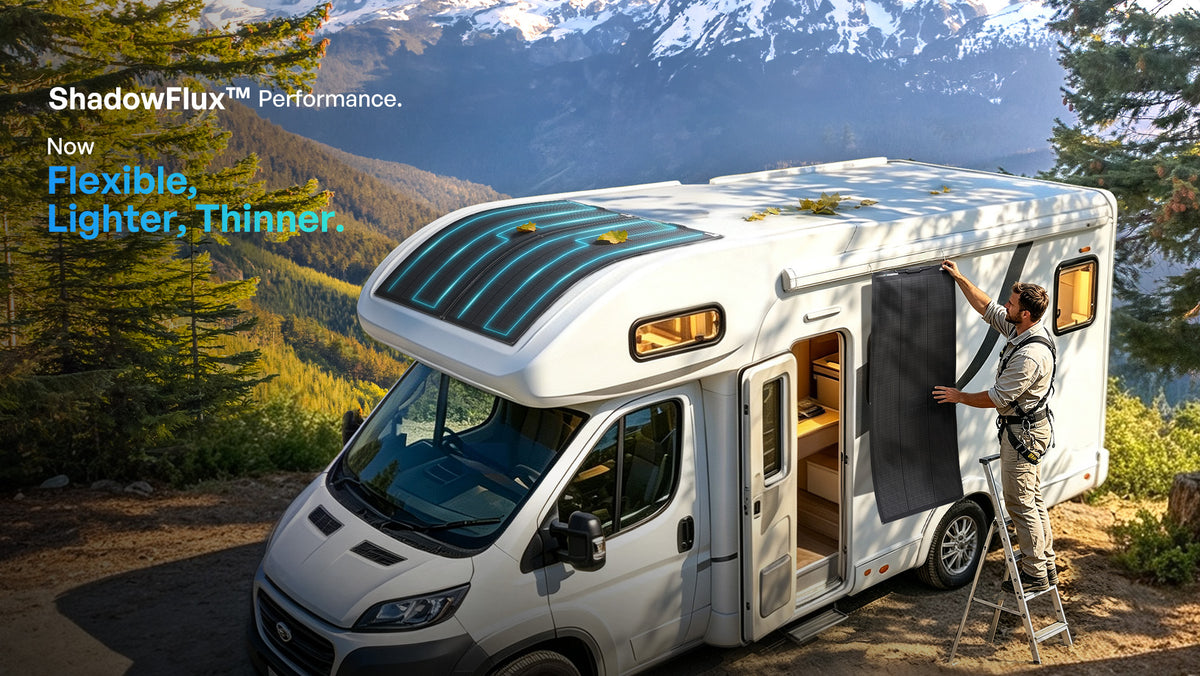
Flex ShadowFlux
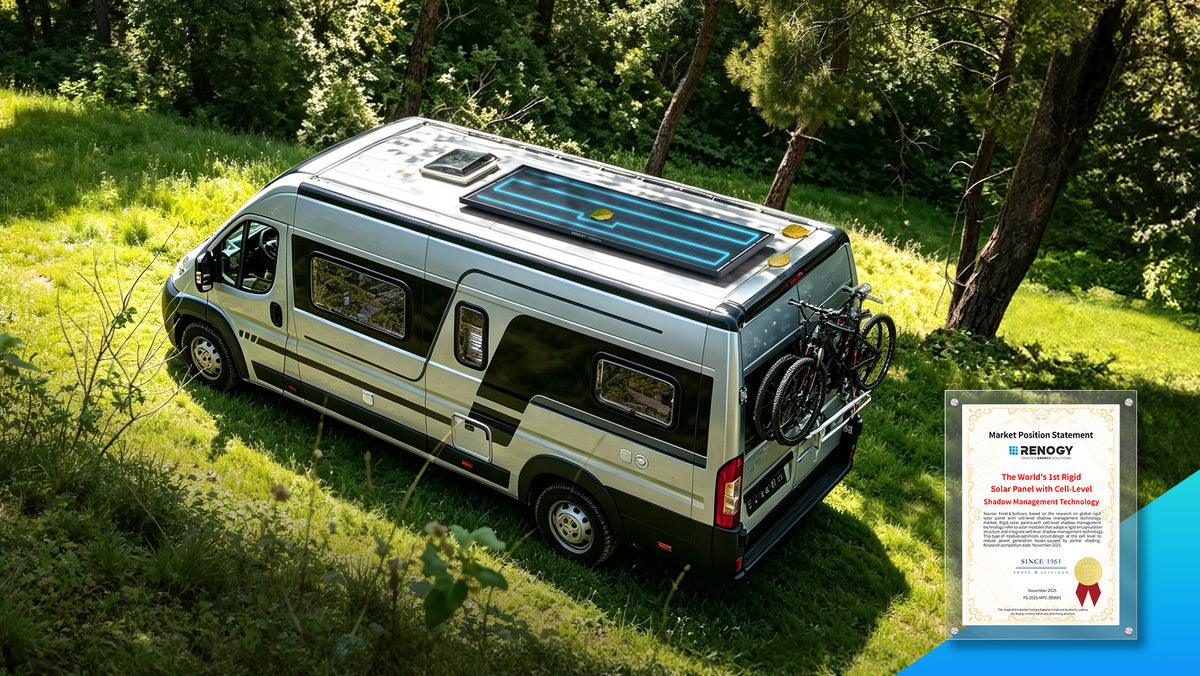
The World's 1ˢᵗ Anti-Shading Rigid Panel
Highlight Features

Maximize Power Under Partial Shade
ShadowFlux™ cell-level anti-shading technology, powered by 30 high-density bypass diodes, helps quickly bypass shaded cells to reduce power loss and maintain up to 85% output under partial shade.
No Need for Perfect Sunlight. Enjoy Your Journey in the Real World.
No need for perfect sunlight. Enjoy your journey in the real world.
No need for perfect sunlight. Enjoy your journey in the real world.


More Power Within Limited Installation Space


Get More Power from Limited Roof Space
Grade A+ 18BB N-Type cells deliver up to 25% efficiency, maximizing power generation even in limited installation spaces. Get more energy from every inch of available space.


More Afternoon Power
Maintains stronger performance as rooftop temperatures climb, helping power your essentials throughout the hottest part of the day.


Charge Faster with Highest Efficiency
Boast up to 25% efficiency from N‑Type 18BB solar cells for effective energy harvesting. Pair with MPPT controllers for even better charging performance.


Built for Outdoor Durability
Performs Reliably for Years Outdoors
Handles Winds, Rain, Snow, and More
Performs Reliably for Years Outdoors
Handles Winds, Rain, Snow, and More


Installation Tips


Add a Protective Film Layer
Apply a compatible paint protection film or removable vinyl layer before adhesive mounting to keep the adhesive off the painted surface.


Mount to a Roof Rack Platform
Create a fully supported mounting surface on a compatible roof rack, then attach the panel to the platform instead of directly to the vehicle roof.
Introducing Our Anti-Shading Rigid Solar Panels
Deliver reliable power under partial shade with rigid ShadowFlux™ panels built for cabins, rooftops and Off-Grid installations.
Frequently Asked Questions
What can Anti-Shading Technology do for me?
What can Anti-Shading Technology do for me?
Conventional solar panels can suffer a total power loss from just a single shaded cell. Flex ShadowFlux is engineered from the ground up to tackle the messy complex shadows of the real world—so you keep generating power when others can't.
Drastically Reduced Power Loss: While all panels lose some power when shaded, ShadowFlux loses far less. You'll see significantly higher wattage output under the same shaded conditions compared to a conventional panel.
What kinds of shading is ShadowFlux designed for?
What kinds of shading is ShadowFlux designed for?
ShadowFlux's advanced cell interconnection technology minimizes power loss across a wide spectrum of common shading scenarios, including:
Small & Point Shadows: Bird droppings, leaf litter, splattered mud.
Linear Shadows: Power lines, antenna wires, boat rigging, fence lines.
Partial & Patchy Shadows: Shadows from chimneys, vents, or scattered tree branches.
Dynamic Shadows: Moving shadows from clouds or shifting objects.
For the Best Experience: To maximize energy production, we always recommend aiming for over half of the panel surface to be in direct sunlight. This allows ShadowFlux to provide a critical power advantage when shading is unavoidable."
What system voltages do the 100W support?
What system voltages do the 100W support?
The 100W panel features a voltage of 33.6V, compatible with 12V and 24V systems.
What is the UV resistance effect of the TPO surface layer?
What is the UV resistance effect of the TPO surface layer?
TPO features built-in UV absorption capability, effectively resisting yellowing and long-term outdoor aging, maintaining stable performance under intense sunlight and temperature swings.
What advantages does this new panel have compared with Renogy’s previous‑generation flexible solar panels?
What advantages does this new panel have compared with Renogy’s previous‑generation flexible solar panels?
The PGF‑optimized structure tolerates repeated bending, vibration and surface deformation much better. It greatly reduces the risk of cell micro‑cracks that cause long‑term power degradation.
Why do you use TPO instead of common ETFE?
Why do you use TPO instead of common ETFE?
Compared with ETFE, TPO offers greater moisture resistance and flexibility, helping reduce the risk of delamination and cell
microcracks during repeated bending and prolonged outdoor use. Its high tensile strength also helps withstand vibration and
mechanical stress, supporting long-term durability.
How much power does a solar panel produce?
How much power does a solar panel produce?
The power output depends on the panel’s wattage and sunlight exposure. For example, a 100-watt panel under ideal conditions (about 5 peak sun hours per day) can produce approximately 500 watt-hours (0.5 kWh) daily. Real-world output varies with weather, location, shading, and panel angle.
How do I calculate how many solar panels I need?
How do I calculate how many solar panels I need?
To calculate how many solar panels you need for your RV, start by estimating your daily power usage in watt-hours (Wh)—add up the wattage of all appliances and multiply by the hours you use them each day. Then divide that total by the daily output of a solar panel.
For example, a 100W solar panel can produce about 400–500Wh per day in good sunlight. So if your RV uses around 1,200Wh per day, you’d need 2–3 panels. Don’t forget to factor in battery capacity and weather conditions for a reliable
Off-Grid setup.

