


10 Brilliant Christmas Gift Ideas for Everyone on Your List
This Christmas, give more than just a gift—give a sense of possibility. Think of offering someone you care about the freedom to explore, the reassurance of backup power, and the...



400W 12V Complete Solar Panel Kit with 3.6kWh Lithium Battery is backordered and will ship as soon as it is back in stock.


400W 12V Complete Solar Panel Kit with 3.6kWh Lithium Battery
Transform your DIY workspace with solar power in one go.

Transform your DIY workspace with solar power in one go.

Renogy Maximum Power Point Tracking technology with a high tracking efficiency of up to 99% and peak conversion efficiency of 98%. It is the best charging solution even in cloudy environments where the maximum power point of the solar panels will fluctuate all day.

The latest 12V 100Ah Core Series LiFePO4 Battery comes with a positive capacity tolerance of up to 6%, providing extra power beyond their rated capacity. Best of all, it can discharge at 300A for 10s to initiate power tools and other heavy loads.


Low iron tempered glass and rugged aluminum frame combine to brave snow load up to 5400 Pa and high winds up to 2400 Pa in challenging weather.

While maximizing solar harvest, the Renogy Rover 40A MPPT Solar Charge Controller actively monitors voltage & current to safeguard your batteries and system from hazards.


Think about how much power you wish to receive after expanding the existing solar power system.

Consider the available roof space your campervan/shed has for extra solar panels.

It's best to install the same type of panels as the original array for a smooth & aesthetic upgrade.

Solar math is made easier with the Renogy Super Solar Calculator. Your off-grid power system.
100W 16BB N-Type Solar Panel x4
40A MPPT Solar Charge Controller x1
12V 100Ah Pro Series Deep Cycle Lithium Battery x3
3000W 12V Pure Sine Wave Inverter x1
4 Set of Solar Panel Mounting Z Bracket x1
Solar Y Branch Connectors MMF+FFM Pair x3
20FT 10AWG Solar Panel to Charge Controller Adaptor Kit x1
8FT 10AWG Battery to Charge Controller Tray Cables x1
16In 4AWG Copper Battery Interconnect Cable for 5/16 in Lugs x4
1FT 8AWG ANL Fuse Cable with Double Ring Terminals for 3/8 in Lugs x1
40A ANL Fuse Set w/ Fuse x1
20A Solar Connector Waterproof In-Line Fuse Holder w/ Fuse x1
Battery Inverter Cables for 3/8 in Lugs x1
500A Battery Monitor With Shunt x1
Renogy 16BB N-Type 100 Watt Solar Panel
12V 100Ah Pro Series Deep Cycle Lithium Battery
40A MPPT Solar Charge Controller
A solar panel has to be connected to a charge controller to regulate current, and a battery to store the electrical power. You will need adapter kit cables to wire the solar panel(s) and charge controller, and tray cables connecting the charge controller to a deep-cycle battery. You will also need an inverter to convert DC power to AC power to power AC home appliances.
On-grid simply means solar power equipment (array or solar panel) is connected to the electrical grid, while off-grid refers to systems that are not connected to the grid and therefore store the generated power for later use. Off-grid systems are not affected by grid blackouts.
The output performance of solar panels is dependent on multiple factors. These include sunlight intensity, temperature, and weather conditions. Indirect sunlight, rising temperatures, cloudiness, and dust and dirt build-up can reduce the output of your solar panel.
How you choose to connect multiple solar panels depends both on the size of your off-grid solar system and your power needs.
Connecting solar panels in a series increases the voltage of the system, leaving the system current output the same as a single panel. The total amount of voltage of a series connected array can be measured by multiplying the voltage output of a single panel by the number of panels. Or if you have panels of different voltages you add the voltage of each panel to get the total voltage of the array.
Connecting solar panels in parallel increases the current of the array and maintains the voltage output of a single panel. The total current of a solar array connected in parallel can be measured by multiplying the current of a single panel by the number of panels. Make sure the open circuit voltage of the connected panels does not exceed the maximum DC input voltage of the power station or controller.
Yes, you can add more solar panels in series/parallel to increase the power output. The Rover 40A solar charge controller has a maximum PV input current of 40A, maximum PV input voltage of 100VDC, and maximum input solar power of 520W at 12V or 1040W at 24V. You are limited by the maximum input voltage and current the charge controller can handle. Building a system operating at around 90% of the rated voltage and current is safer to ensure tolerance for any system overvoltage or overcurrent.
In order to determine what size solar kit is appropriate, you must first define the total load to be expected of the solar power system. Most manufacturers will publish a specification sheet of the AC unit online and will include a nameplate sticker on the body of your AC home appliances. Both can be used to determine the actual power rating of the AC. BTU is a common measuring unit for energy in AC and water heater products, however we are intrested in the energy rate, or simply power.
Power will be listed in units of Watts, and can be used to determine the total load resulting from running the intended AC unit. Multiply the power rating recorded in watts by the total number of hours of operation intended, to obtain the total watt-hours. Divide the total watt-hours by the peak sun hours in the location of installation, and multiply by a safety factor of 1.5-2, to obtain the total number of watts your panels should produce to power the air conditioner load. The total power load can be divided by the power output of one panel to obtain the number of panels needed.
If you intend to use this solar power kit as a power supply for home appliances (e.g. coffee maker, TV, etc.), then you will need an inverter to convert the output voltage from a 12 VDC system to a 120V AC output socket. Renogy offers a variety of inverter products to suit your unique system and meet your power demand.
This Christmas, give more than just a gift—give a sense of possibility. Think of offering someone you care about the freedom to explore, the reassurance of backup power, and the...

Black Friday is on the horizon! For anyone dreaming of energy independence, whether for your RV, marine, cabin, or home, this is the most anticipated event of the year. Renogy...
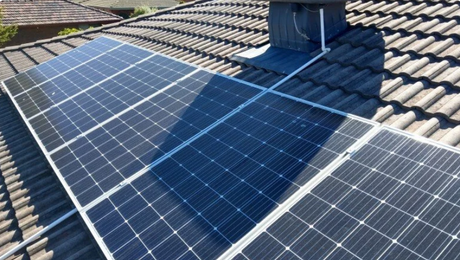
A single leaf, a small branch, or even the shadow of a chimney falls across your solar panel. The overall system's power output drops instantly. This frustrating shading issue has...
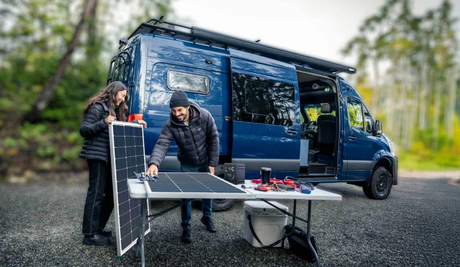
There's nothing more frustrating for an RVer than waking up to a cloudy day. While the weather might pause your outdoor plans, the real concern is your solar panel energy...

The demand for solar energy is increasing day by day across the world, including Canada. The major reason behind its rising demand is that it generates electricity without producing air...
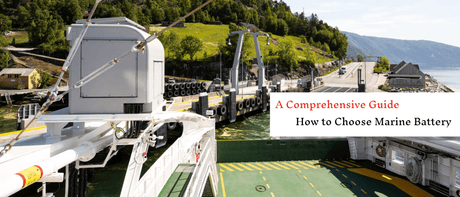
A good marine battery will ensure a safe, reliable, and fun sailing experience on your boat. The right battery will power the navigation system, communication system, lighting, refrigeration, and electronics....

Though disconnecting a car battery is simple, and you don't necessarily need to visit a technician for this purpose, not all can perform this task effectively. Whether you want to...
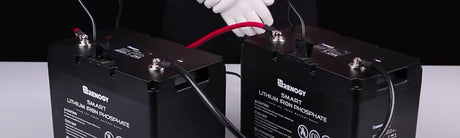
Solar energy is becoming an increasingly popular source of renewable energy. It is clean, sustainable, and provides an excellent alternative to traditional fossil fuels. However, the issue with solar energy...

