


200W Solar Panel | 2 x 100W N-Type Panels w/Z-Mounts


- ShadowFlux™ Anti-Shading: Delivers up to 85% more output in partial shade. While standard panels quit, ShadowFlux™ keeps your system charging in real-world conditions.
- 25% Efficiency N-Type Cells: Industry-leading conversion rate with 16BB tech. Optimized for superior performance in low light and extreme heat with minimal power loss.
- Ultra-Compact for Class B Vans: 7.5% smaller and 11.7% lighter than standard panels. High power density makes it the perfect fit for limited RV roof space.
- Built for Off-Road Durability: IP67 waterproof and vibration-resistant. Backed by a 25-year 80% output warranty for reliable power in rain, snow, and dust.
- Easy DIY Z-Bracket Install: Includes all fasteners and Z-mounts for quick setup on RVs, sheds, or frames. High voltage design compatible with 12V/24V systems.
200W Solar Panel | 2 x 100W N-Type Panels w/Z-Mounts - ShadowFlux™ N-Type is backordered and will ship as soon as it is back in stock.


200W Solar Panel | 2 x 100W N-Type Panels w/Z-Mounts


Made to Fit Your Van Life
Panel sizes are carefully matched to common vehicle roof dimensions, from Class B vans to SUVs and minivans, delivering clean, edge-to-edge coverage with no wasted space.


ShadowFlux™ Tech
Exclusive Anti-Shading Tech Against Hot-Spots
ShadowFlux™ prevents shaded areas from overheating and slowing down your entire system. Your panels stay cooler, last longer, and keep saving you money year after year.

Ready for Extreme Weather
Withstand up to 5,400Pa of heavy snow and up to 2,400Pa of high wind load, delivering dependable performance in harsh conditions for users concerned about whether snow affects solar panels.

Enhanced Durability
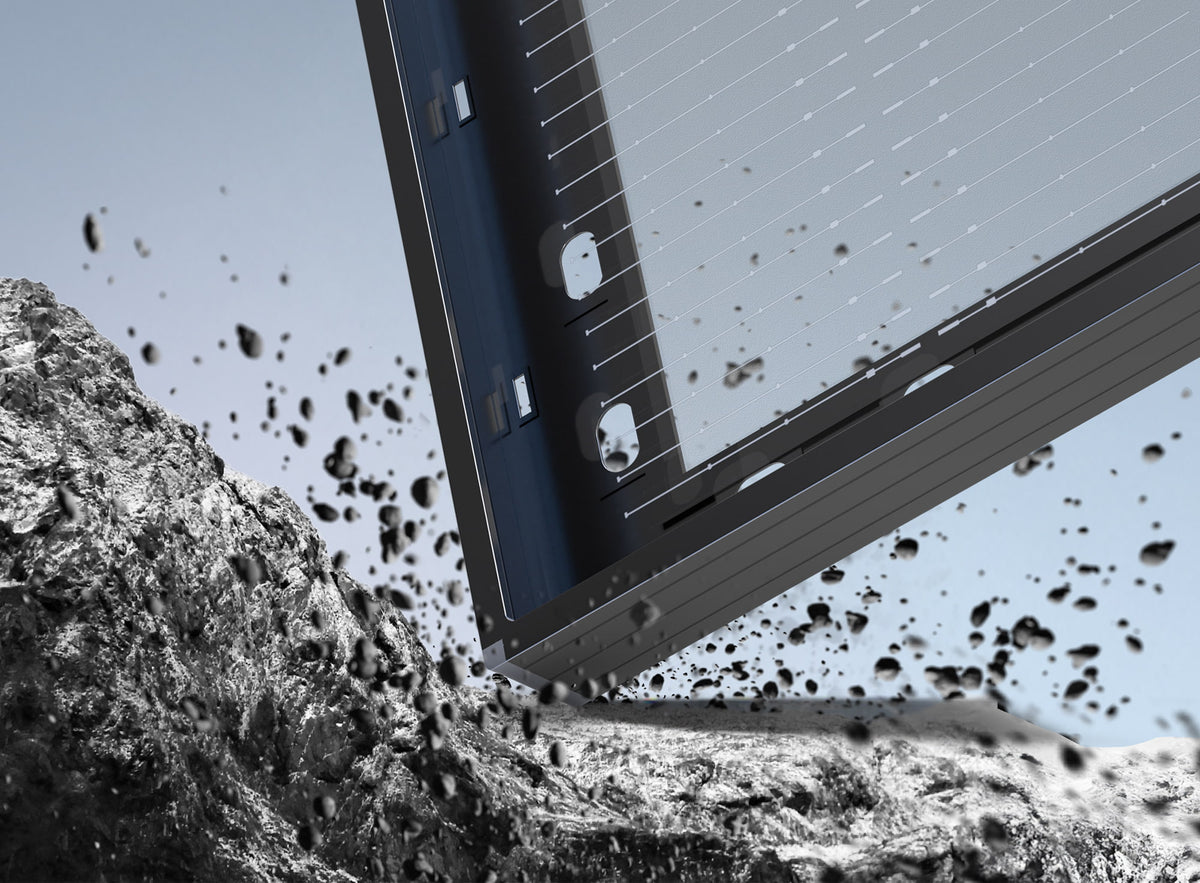
Engineered with a thickened frame and extra-strong glass to shield against hail, falling branches, and accidental hits.
Package Includes
-

100W N-type Solar Panel & Z-Mounts
x2
-

100W ShadowFlux™ Solar Panel & Z-Mounts
x2


Frequently Asked Questions
What do I need to complete my off-grid solar power system?
What do I need to complete my off-grid solar power system?
A solar panel has to be connected a charge controller to regulate current, and a battery to store the electrical power. You will need adapter kit cables to wire the solar panel(s) and charge controller, and tray cables connecting the charge controller to a deep-cycle battery.
What do off-grid and on-grid mean?
What do off-grid and on-grid mean?
On-grid simply means solar power equipment (array or solar panel) is connected to the electrical grid, while off-grid refers to systems that are not connected to the grid and therefore store the generated power for later use. Off-grid systems are not affected by grid blackouts.
How should I connect solar panels in my electrical circuit (series vs parallel)
How should I connect solar panels in my electrical circuit (series vs parallel)
Solar panels can be connected in series or in parallel to meet your electrical circuit size and power demand. Connecting solar panels in series will have the effect of adding up their operating voltage output, while system current output will be the same as that for one panel. While, connecting solar panels in parallel will have a different effect; individual panels operating current output will add up to be the system output current, while system output voltage will be the same as the output voltage of one solar panel. To meet the optimum power output and system rating for your power system, you can use both parallel and series connections.
How many solar panels do I need?
How many solar panels do I need?
The best way to gauge how many solar panels you need, is to understand and define the power load needed from this system. Power is measured in Watts, and capacity is commonly measured in Watt-hours (multiplying power output in watts by the required number of hours of operation multiplied by a safety factor of 1.5-2). Therefore, it is wise to size your battery bank first based on the minimum required capacity, and accordingly decide how many panels or how much power input is needed.
What is the meaning of 24V in the product title,Why is this value different from the voltage of the solar panel?
What is the meaning of 24V in the product title,Why is this value different from the voltage of the solar panel?
When you open the product page, you will see a title like "xxx Watt 24 Volt Monocrystalline Solar Panel". The "24V" here does not refer to the voltage of this solar panel (VOC or VMP), but to the fact that one xxxW solar panel is suitable for 24V system (i.e. a 24V battery),no need for additional series and parallel connections.Therefore, these are two completely different values with different meanings.
How to choose a controller suitable for my Renogy 16BB N-Type 200 Watt 24V Solar Panel?
How to choose a controller suitable for my Renogy 16BB N-Type 200 Watt 24V Solar Panel?
To choose a suitable controller for your Renogy 16BB N-Type 200 Watt 24V Solar Panel, it's important to consider the panel's optimized voltage designed for efficient energy conversion, with an open-circuit voltage (Voc) of 37.44V; for single or parallel connections, the controller's maximum PV input voltage should be at least 40V, while for series connections, the controller's maximum PV input voltage should be no less than 40V multiplied by the number of panels connected in series, ensuring optimal performance and compatibility with your solar panel system.

